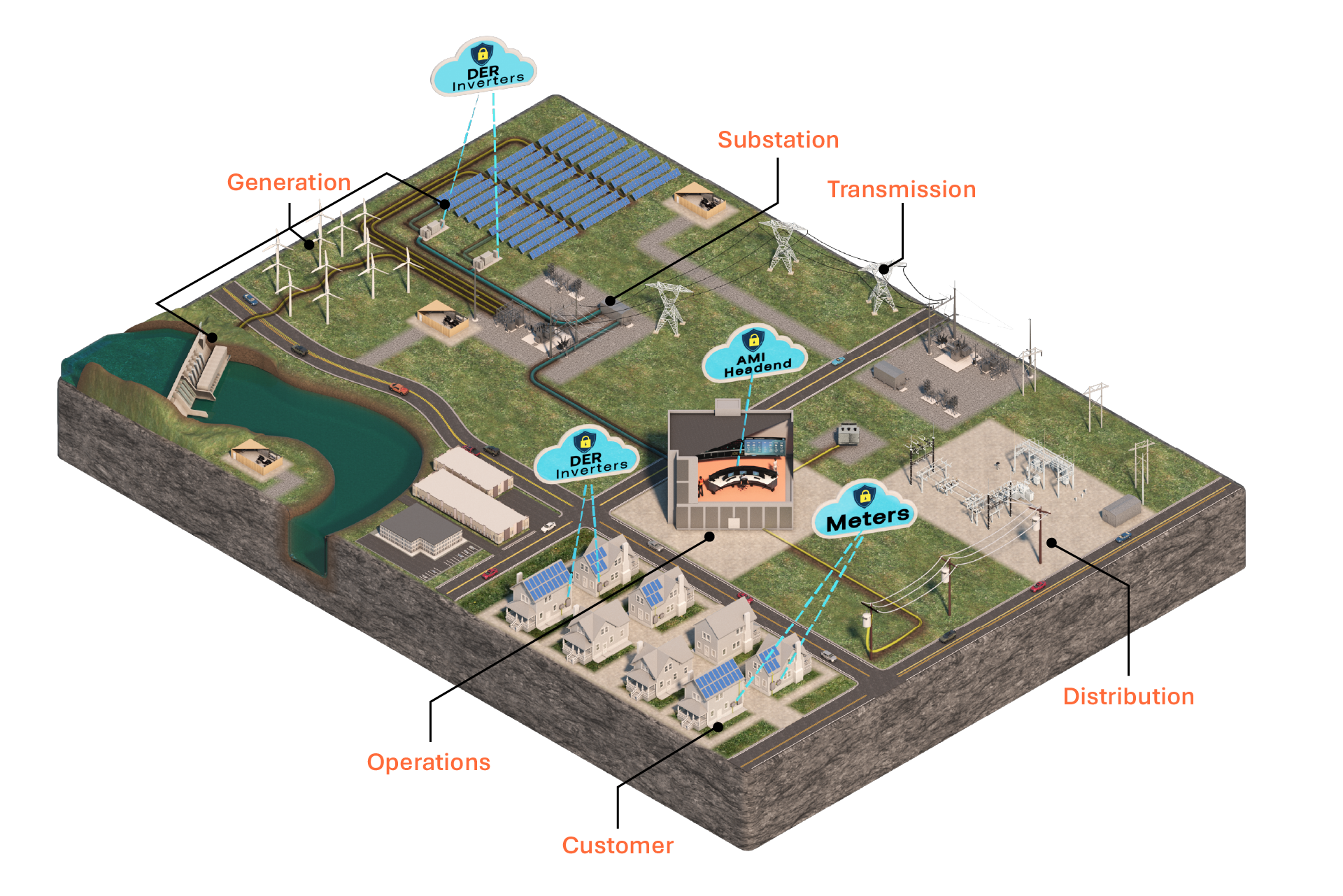
Figure 1. Illustration of the modern grid ecosystem.

Operational Technology Services



Trending

What We Do
Industries
Solutions
Figure 1. Illustration of the modern grid ecosystem.
Grid modernization depends on a diverse suite of digital systems and devices. Core elements include ADMS, phasor measurement units (PMUs), AMI, Internet of Things (IoT) technologies, and DERs. Together, these components form the foundation of a more intelligent, data-driven grid but also introduce new points of cybersecurity exposure.
North American Electric Reliability Corporation (NERC) critical infrastructure protection (CIP) standards apply primarily to the bulk electric system (BES), which includes transmission elements operated at 100 kV and above, generation facilities with aggregate nameplate ratings greater than 75 MVA connected at BES voltage, and certain lower-voltage assets such as black start generation paths and high-voltage transmission facilities. These assets are subject to strict, mandatory cybersecurity controls designed to protect grid reliability and resilience.
Once power is stepped down at the sub-transmission or distribution level, most feeders, AMI systems, reclosers, and customer-sited DERs fall outside the BES definition and therefore beyond CIP requirements. Their protection is typically determined by state regulations or individual utility practices. While certain sub-100-kV equipment, such as black start units or under-voltage load-shedding schemes, may still qualify as BES, a significant regulatory gap persists. As a result, cyber defenses on the distribution side of the grid remain comparatively limited across most jurisdictions.
Current cybersecurity standards provide important guidance for grid security but fall short of addressing the full complexity of modern, highly distributed systems.
Regulatory updates that place cybersecurity at the center of modernization efforts are essential to building a secure, responsive and resilient grid.
FERC Order 901
Establishes requirements for data sharing, model validation and operational oversight of inverter-based resources (IBRs) within the Bulk-Power System (BPS). However, it exempts distributed resources, leaving a security gap outside direct utility oversight. Legacy systems that lack communication capabilities further contribute to blind spots in grid cybersecurity.
As utilities integrate smart devices, automated control systems and cloud-based analytics into grid operations, these technologies introduce new vulnerabilities across software, communication protocols and third-party platforms. Compromises in any of these areas can disrupt power delivery, enable unauthorized access to operational networks or manipulate critical infrastructure. The grid’s growing reliance on third-party vendors and opaque global supply chains further heightens these risks. Smart inverters, often manufactured overseas, illustrate the challenge most clearly, but similar concerns extend to smart meters, cellular and RF communications modules, battery management systems, EV chargers, and cloud gateways. All of these technologies represent potential vectors for firmware-level compromise or supply chain attack, underscoring the need for rigorous security oversight.
At the distribution level, AMI and distributed energy resources (DERs) represent significant cybersecurity concerns. Their widespread deployment creates a large attack surface, and successful compromises have the potential to disrupt operations, compromise customer data and affect grid stability.
AMI consists of smart meters, communication networks and data management platforms that enable real-time monitoring and control of electricity usage. The first wave of deployment in the late 2000s and early 2010s introduced roughly 62 million AMI 1.0 meters, designed primarily for “meter-to-cash” functions such as automated interval reads and remote connect/disconnect. In contrast, the next generation of AMI 2.0 devices, with approximately 2.5 million currently being installed, provides expanded capabilities, including high-resolution voltage sensing, edge computing, and native DER awareness.
This wide-area, system-of-systems architecture significantly expands the cyberattack surface. Each smart meter operates on Linux-based firmware, making it susceptible to exploits such as remote code execution, denial-of-service and data tampering. Meter traffic traverses a mesh network before terminating at the AMI headend — a core SCADA component that, in some utilities, is bridged directly or through a demilitarized zone (DMZ) to the corporate IT network at the control center. A breach at any point along this path can lead to localized outages, inaccurate billing or the loss of manual-read fallback. When meters are equipped with remote disconnect relays, the stakes increase further, as a coordinated cyberattack could trigger wide-area disruptions, escalate into transmission-level instability and jeopardize overall grid reliability. In severe cases, cascading impacts could necessitate load shedding, extending instability well beyond the immediately affected region. Figure 2 highlights two potential AMI attack scenarios, showing how vulnerabilities, attack vectors, and methods of exploitation could translate into widespread operational and financial impacts.
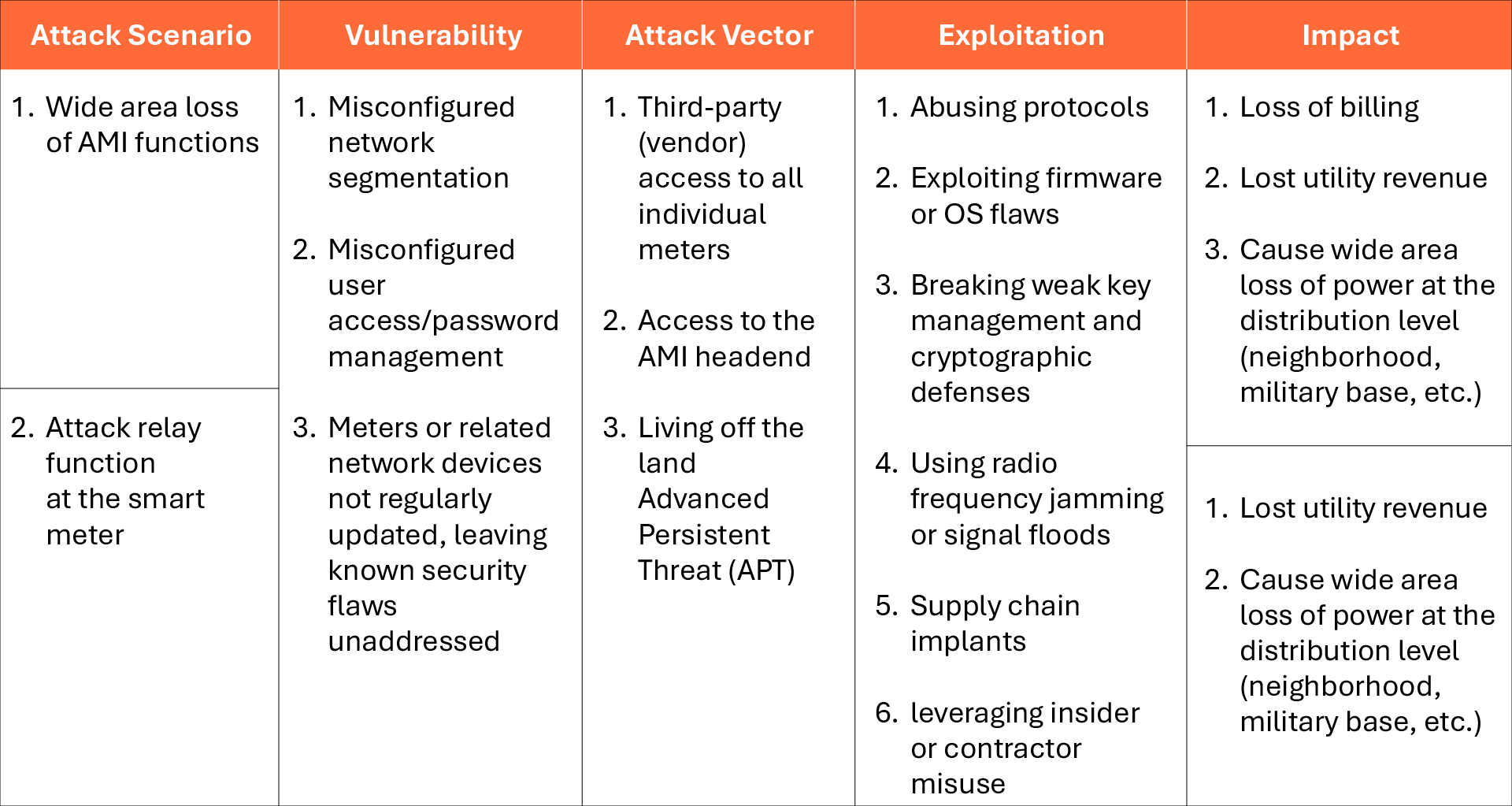
Figure 2. Potential AMI attack scenarios, highlighting vulnerabilities, attack vectors, methods of exploitation and resulting impacts.
Utilities have already encountered integrity breaches within AMI that disrupted billing systems, producing financial losses in the millions and, in some cases, tens of millions of dollars. By contrast, the second attack scenario remains theoretical but has been validated as technically feasible. In 2023, researchers at Oregon State University demonstrated a proof of concept showing how coordinated manipulation of AMI systems could escalate into broader grid instability.
Strengthening AMI requires more than compliance with baseline standards. Utilities can adopt reference architectures and implement layered mitigation strategies that address both technical vulnerabilities and operational risks. Figure 3 illustrates a representative AMI security architecture, highlighting key zones and defenses across the network.
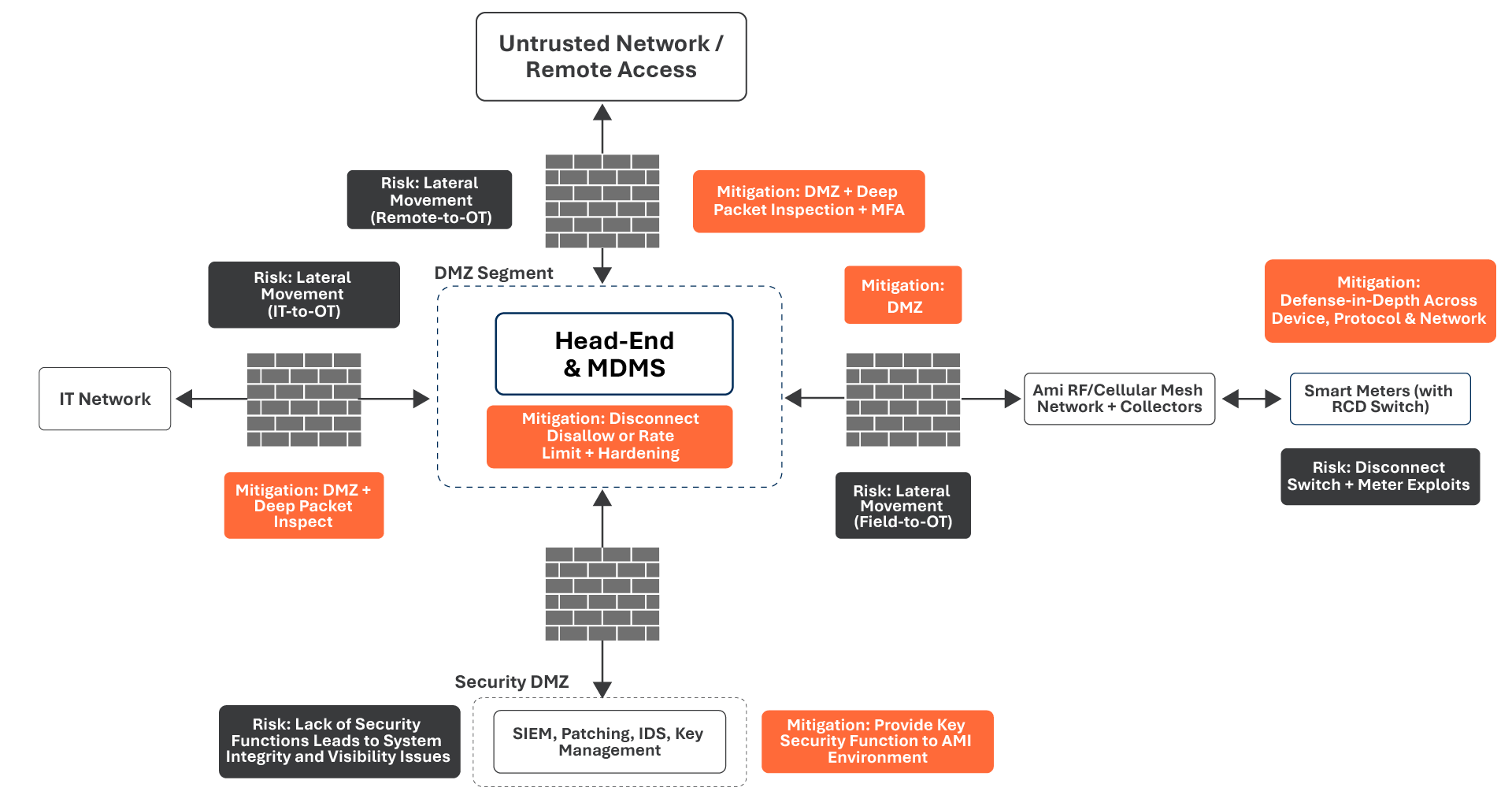
Figure 3: AMI security architecture.
The following best practices, split into two categories, highlight key measures such as secure key management, network segmentation, access controls and continuous monitoring, forming the foundation of a defendable and resilient AMI environment:
Key Management
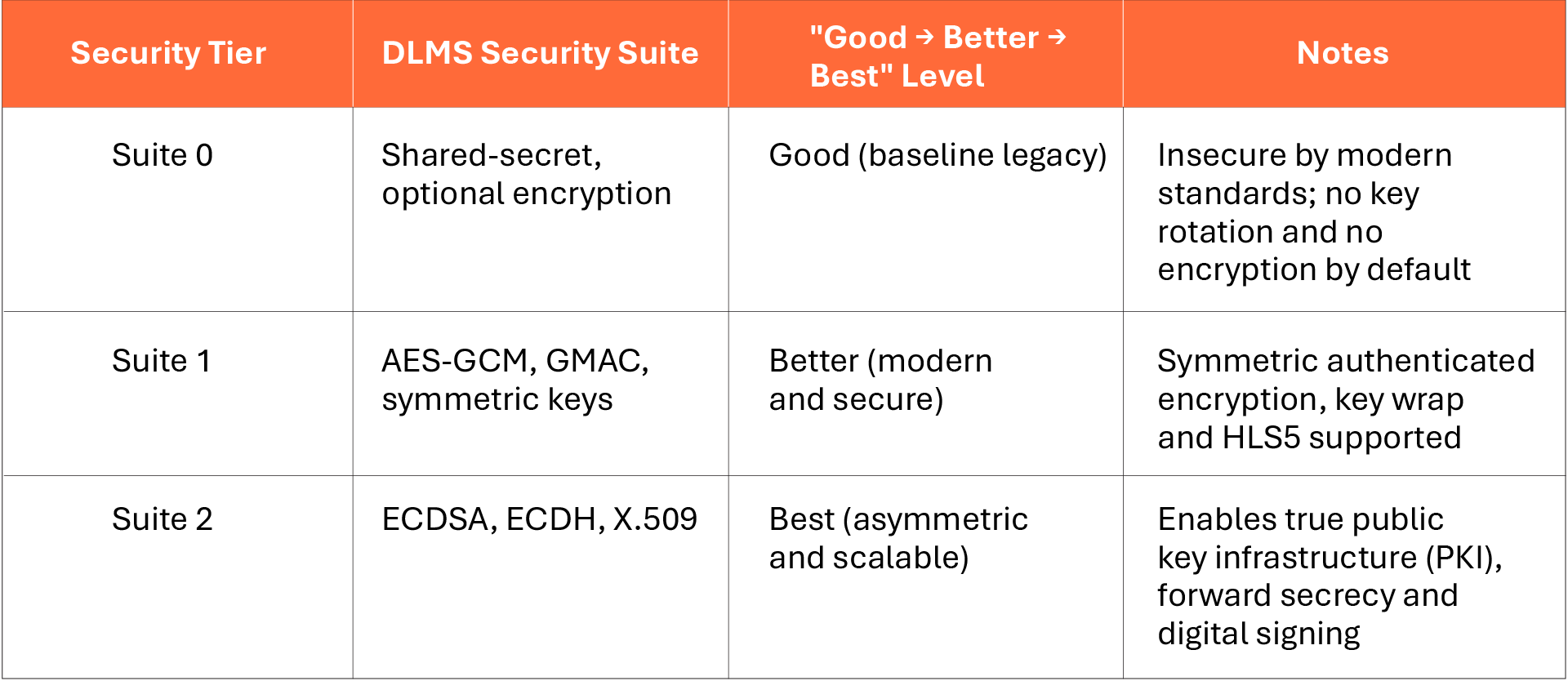
Figure 4: DLMS/COSEM security suites showing progression from legacy shared-secret methods (Suite 0) to modern symmetric encryption (Suite 1) and fully scalable asymmetric cryptography with PKI support (Suite 2).
Defendable Network Architecture
Inverter-based resources (IBRs), including solar photovoltaics and battery energy storage systems, present distinct cybersecurity challenges due to their dependence on networked monitoring and control. Their rapid deployment across residential, commercial and industrial settings creates a highly distributed footprint. Combined with remote connectivity requirements, this expansion introduces new attack surfaces and amplifies system vulnerabilities.
In solar power systems, panels generate direct current (DC) that is converted to alternating current (AC) by photovoltaic (PV) inverters before being fed into the grid. In residential and commercial installations, these inverters often connect to the internet through serial communication dongles using Wi-Fi, general packet radio service (GPRS), 4G or wired connections. Data is transmitted to cloud services via protocols such as MQTT, enabling remote monitoring, visualization and management of millions of distributed devices. Some inverter models bypass dongles entirely, connecting directly to the cloud. Owners typically interact with these platforms through mobile or web applications, often using HTTP during setup and configuration.
By contrast, utility-scale inverters are usually integrated into local supervisory control and data acquisition (SCADA) or energy management systems. They operate over secure, private networks using industrial protocols such as Modbus, DNP3 or IEC 61850, with data managed on-site. While this architecture reduces exposure to internet-based threats, it is not immune. Risks persist from misconfigured firewall rules, insufficient network segmentation, insecure remote access pathways and unpatched protocol vulnerabilities. Emerging practices such as the adoption of cloud-based analytics and digital twin technologies further complicate the landscape. If not properly segmented from operational networks, these tools can reintroduce external attack vectors into systems otherwise designed for isolation.
There are three primary categories of solar power system installations:
A significant share of residential and commercial string inverters are equipped with wireless connectivity to cloud platforms, many of which are operated by Chinese companies. Six of the world’s top 10 solar power system vendors, including inverter manufacturers, are headquartered in China. As a result, more than half of all inverters are both owned and manufactured in China, while another 30% are produced in Chinese facilities on behalf of U.S. or other international companies. This concentrated supply chain raises serious cybersecurity concerns. Risks include remote firmware updates routed through foreign-controlled infrastructure, as well as persistent internet connectivity that enlarges the attack surface and the possibility of hardware-level compromises such as embedded rogue communication devices. Equally concerning is the potential for deliberate actions by the manufacturer, or for the exploitation of vulnerabilities, that push malicious firmware at scale and jeopardize the security and reliability of deployed systems.
Although utility-scale inverters are not typically connected to public cloud services, they remain exposed to similar risks. Utilities often enforce strict network segmentation and prohibit direct internet-based remote access to inverter equipment. Even so, investigations have revealed instances of inverters and batteries, particularly those manufactured in China, containing undocumented communication hardware, such as embedded cellular radios. These components create covert communication channels that can bypass firewalls and monitoring systems. In parallel, utilities continue to depend on vendor-supplied firmware and update packages. If compromised in the supply chain, these updates could deliver malicious code into critical infrastructure. The SolarWinds breach demonstrated how trusted update mechanisms can be exploited to insert backdoors at scale. A comparable compromise within the inverter supply chain could have severe implications for grid stability and national energy security.
Commercial and residential inverters represent a critical intersection of high likelihood and high impact. These systems often operate with weaker security controls, creating a broad and vulnerable attack surface. The risk is amplified by the growing aggregate generation capacity of distributed solar resources, which now supply a substantial share of daytime demand in many regions. This makes them both more attractive targets and more capable of leading to large-scale disruption. Potential threats include unauthorized configuration changes, remote shutdowns and tampering with safety mechanisms, any of which could result in localized or neighborhood-scale outages. More severe risks arise if attackers disable anti-islanding protections or override export limits, as the resulting grid imbalances could escalate into transmission-level instability, undermining overall grid reliability. Figure 5 illustrates how vulnerabilities in string inverters can be exploited to trigger these types of outcomes.
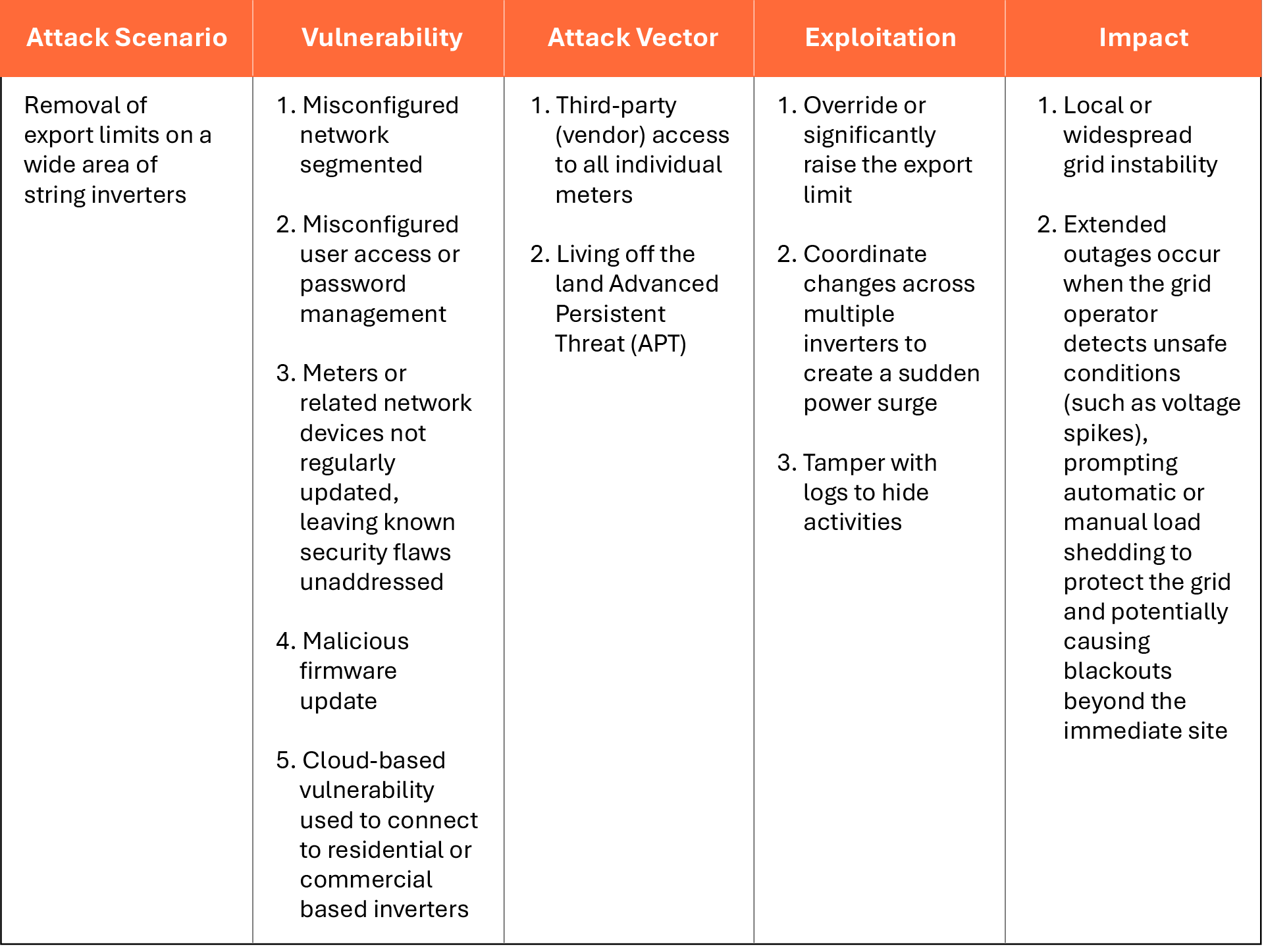
Figure 5. Cyberattack scenario illustrating how vulnerabilities in string inverters can be exploited.
Mitigation Strategies and Best Practices
While residential and commercial solar users do not have the same security infrastructure as utilities, they often face the greatest exposure and can still take meaningful steps to reduce their risk. Figure 6 shows a reference architecture for inverter-based resources (IBRs), illustrating key risk points and mitigations across residential, commercial, and utility-scale deployments.
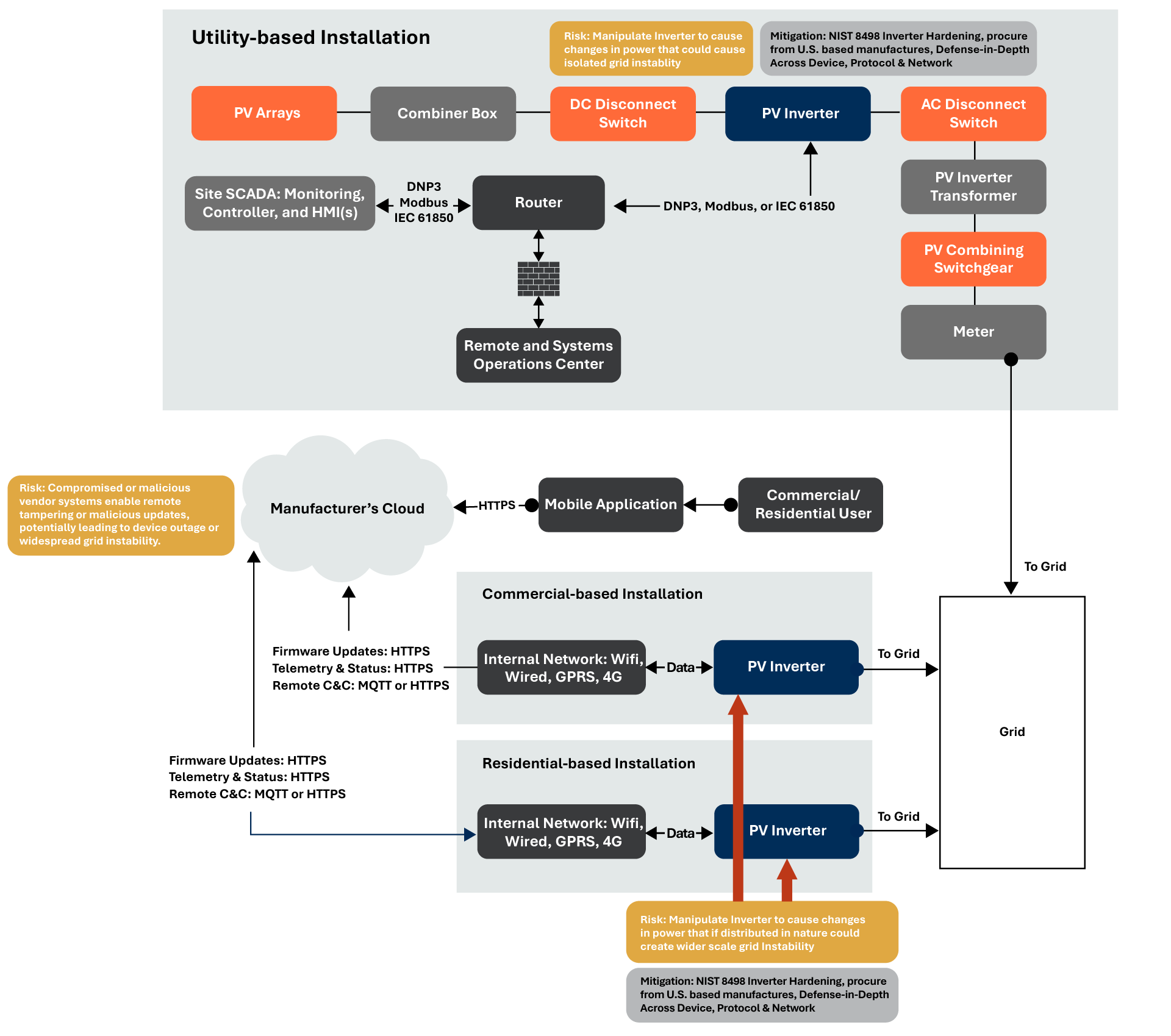
Figure 6: IBR reference architecture.
Residential and commercial users can reduce exposure by adopting practices such as:
Utility-Scale Installations
While inverter-based resources continue to expand across energy systems, their growing digital footprint creates new risks that can be targeted through both supply chain vulnerabilities and weak device configurations. Owners and operators can significantly reduce exposure by adopting structured cybersecurity measures, including:
Additional Actions That Would Reduce Risk Across the DER Ecosystem
Under the current regulatory framework, cybersecurity for commercial and residential inverters remains the responsibility of the consumer-operator. Utilities, however, can play a critical role by educating customers and collaborating with local governments to establish policies that promote secure communication with distributed inverter resources. Enabling this connectivity would enhance visibility and control, significantly strengthening grid security. Establishing minimum cybersecurity expectations, supporting domestic or allied-nation manufacturing, and aligning distributed systems with recognized best practices can greatly reduce the likelihood of these assets serving as distributed attack vectors. Key steps to advance inverter cybersecurity and strengthen grid resilience include:
Key vulnerabilities at the grid edge include cloud-connected inverters susceptible to remote tampering and smart meters exposed through insecure firmware, weak key management and insufficient network segmentation. For AMI systems, utilities should prioritize modern DLMS/COSEM security suites with robust encryption and authentication, while segmenting AMI networks from both trusted and untrusted domains. Role-based access controls and multi-factor authentication must be enforced, with high-risk functions such as remote disconnect restricted to a minimal set of authorized users. Regular patching, validated firmware updates and continuous monitoring across the AMI environment are essential to strengthen detection, accelerate response and sustain long-term resilience.
For inverter-based systems, effective risk reduction starts with procuring devices from U.S.-based or allied manufacturers with transparent and verifiable supply chains. Residential and commercial installations should isolate inverter networks, restrict outbound communications and disable unnecessary cloud connectivity. Firmware updates must be manually verified and applied only after source authentication. At the utility scale, additional measures are required, including role-based access controls, centralized logging, firmware validation aligned with NIST IR 8498 and formal supply chain risk assessments guided by frameworks such as INL RPT-24-80434. Taken together, these practices — across both AMI and inverter deployments — move cybersecurity from a reactive safeguard to a foundational component of modern grid reliability.
Technical controls alone are not sufficient. Under the current regulatory framework, cybersecurity for residential and commercial inverters remains largely the responsibility of consumer-operators. To close this gap, state public utility commissions should collaborate with utilities to establish multistate oversight that enforces minimum cybersecurity requirements for behind-the-meter devices capable of affecting grid reliability. A nationally supported list of approved vendors, maintained by DOE, DHS or a multistate body, could provide further assurance by guiding procurement based on code transparency and hardware integrity. Once UL 2941 is finalized, utilities and regulators should require certification as a condition of procurement, creating a verifiable cybersecurity baseline for inverter-based resources. Together, these measures, combined with technical remediation, build a stronger and more coordinated foundation for securing distributed energy infrastructure at scale.






.svg)