

White Paper

Dynamic Limits of Net-Zero Large-Load Interconnection in ERCOT’s Batch Zero Framework

ERCOT’s evolving large-load interconnection discussions, including concepts emerging through the Batch Zero framework, reflect a growing need to accelerate project energization while managing near-term grid impacts. While net zero and self-limiting configurations may support faster interconnection through colocated generation and storage, system dynamics reveal that even self-sufficient facilities rely on the grid during disturbances.


The rapid growth of large-scale data centers, particularly those driven by artificial intelligence workloads, is placing new demands on electric grid infrastructure. These facilities can reach gigawatt-scale consumption, introducing both significant load and highly dynamic operating characteristics. At the same time, traditional interconnection processes, often dependent on long transmission upgrade timelines, are increasingly misaligned with the speed required by developers.

In Electric Reliability Council of Texas (ERCOT), this challenge has prompted ongoing discussion around alternative large-load interconnection approaches intended to accelerate project energization while limiting near-term grid impacts. Emerging concepts associated with ERCOT’s Batch Zero discussions and other flexible interconnection approaches contemplate configurations where large-load customers colocate generation and energy storage and operate within defined limits at the point of interconnection.


Read More  

The rapid growth of large-scale data centers, particularly those driven by artificial intelligence workloads, is placing new demands on electric grid infrastructure. These facilities can reach gigawatt-scale consumption, introducing both significant load and highly dynamic operating characteristics. At the same time, traditional interconnection processes, often dependent on long transmission upgrade timelines, are increasingly misaligned with the speed required by developers.

In Electric Reliability Council of Texas (ERCOT), this challenge has prompted ongoing discussion around alternative large-load interconnection approaches intended to accelerate project energization while limiting near-term grid impacts. Emerging concepts associated with ERCOT’s Batch Zero discussions and other flexible interconnection approaches contemplate configurations where large-load customers colocate generation and energy storage and operate within defined limits at the point of interconnection.

Under these approaches, facilities may rely on behind-the-meter resources to offset a significant portion of their demand, potentially allowing portions of the load to energize ahead of major transmission upgrades while broader system reinforcements continue through the planning process. As these frameworks increasingly rely on customer-managed resources to limit grid impact, understanding dynamic system behavior becomes critical to evaluating how facilities perform during disturbances and contingency conditions.

These frameworks represent a meaningful shift in how large loads are integrated. They rely on behind-the-meter resources not only to supplement grid supply, but to serve as the primary means of meeting demand while maintaining operational constraints. In this model, the grid continues to provide reliability services and system support, even as the facility aims to balance its own energy needs.

In this paper, net zero refers to operational configurations where colocated resources are intended to offset facility demand at the point of interconnection during normal operating conditions, rather than implying complete electrical independence from the grid.

But can net-zero behavior be maintained under all operating conditions? Answering this requires moving beyond steady-state assumptions and examining how the system behaves in real time. While net-zero frameworks are often defined by balanced energy exchange over time, the physical behavior of the grid during disturbances introduces a different reality, one where short-duration imbalances are unavoidable. 
The Promise of Net-Zero Interconnection

Net-zero interconnection frameworks are emerging as a potential pathway for large-load customers to connect to the grid more quickly while limiting their immediate impact on existing infrastructure.

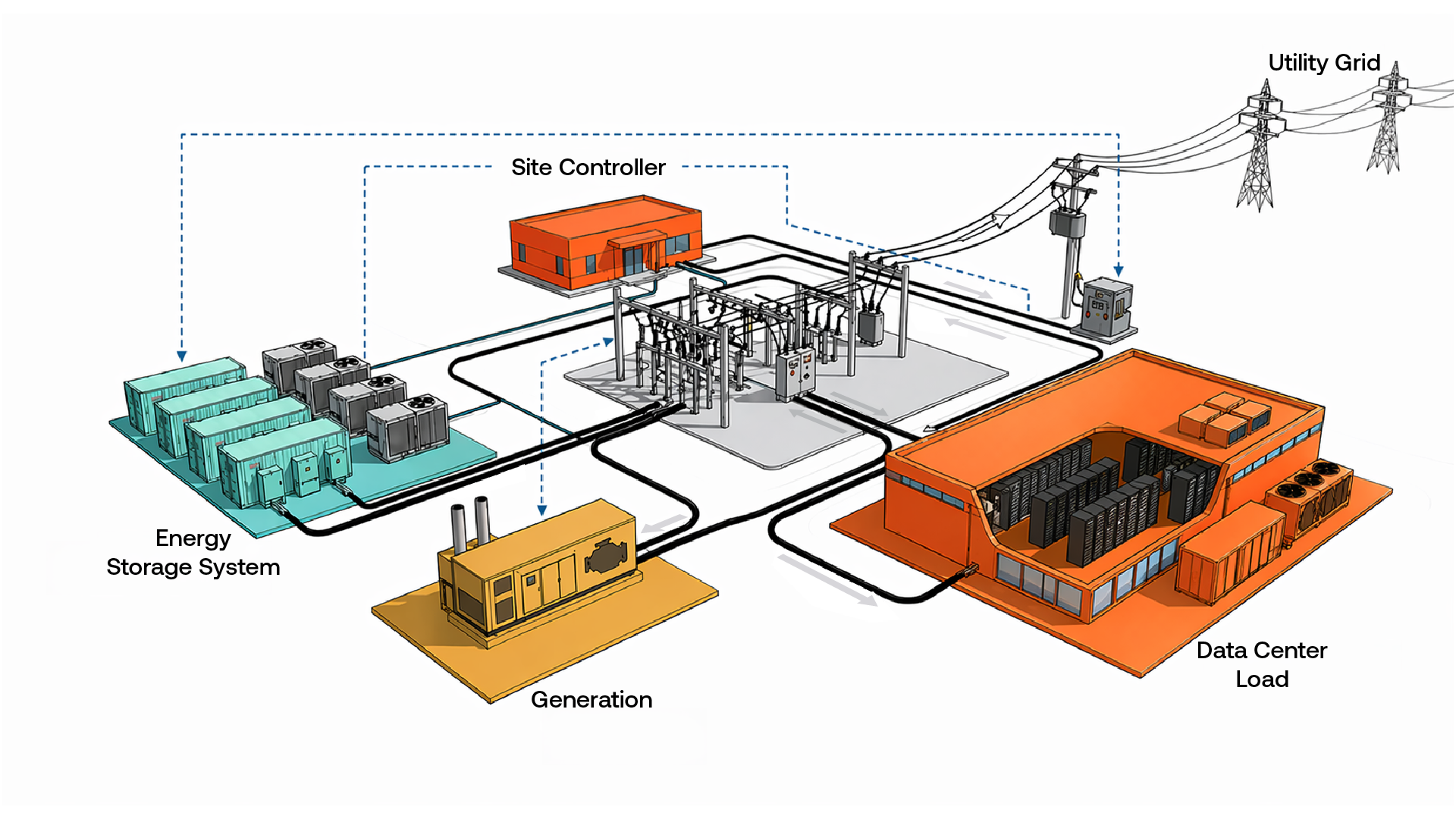
Under this model, a facility pairs large load with onsite generation and energy storage. The facility then operates within a defined limit at the point of interconnection, using behind-the-meter resources to serve load and manage grid imports or exports. In some configurations, the goal is not only to reduce net grid withdrawals, but to fully offset the facility’s energy needs during normal operation. 

Figure 1: Self Limiting Facility

CLICK TO ENLARGE

This approach offers a practical bridge between today’s grid constraints and future system reinforcements. Projects may be able to energize before all transmission upgrades are complete, while preserving optionality for future bidirectional power exchange, market participation and dispatchability once planning, stability and deliverability requirements are met.

For large data centers and other dynamic loads, this framework introduces a more flexible way to think about interconnection. Rather than requiring the grid to serve the full facility demand from the start, the model shifts more responsibility to on-site resources. Colocated generation becomes the primary supply source. Storage moves beyond load smoothing and begins to support operational compliance. The grid remains connected, providing reliability services, contingency support and operating flexibility.

That distinction is important. Net-zero operation is not simply an accounting concept. It is an actively managed operating state that depends on metering, controls, resource coordination and real-time response.

This is where the promise of the model meets its central challenge: maintaining controlled grid interaction during normal conditions is different from maintaining it during a sudden system disturbance. 

Testing Dynamic System Behavior

Electric power systems operate on a fundamental principle: generation and load must remain balanced at every moment. When that balance is disrupted, such as through the sudden loss of a major behind-the-meter generator, the system responds immediately. Frequency begins to decline, and the imbalance is addressed through a combination of inertial response, primary frequency control and power flows across the network. In net-zero interconnection frameworks, this moment is critical.

Facilities designed to operate with colocated generation, and storage are expected to manage their internal resources and remain within defined import and export limits. Under steady state conditions, this model can be effective. However, during a contingency event, the sequence of response is governed by physical system behavior rather than operational intent.

The bulk power system reacts on a timescale measured in milliseconds, driven by the inherent characteristics of interconnected generation. By contrast, behind-the-meter resources, including battery energy storage systems, require a finite amount of time to detect the disturbance, process control signals and ramp output. This difference in response time creates an unavoidable outcome where the grid supplies power first. This behavior persists even when the facility is designed around substantial colocated generation capacity and fast-response storage systems.

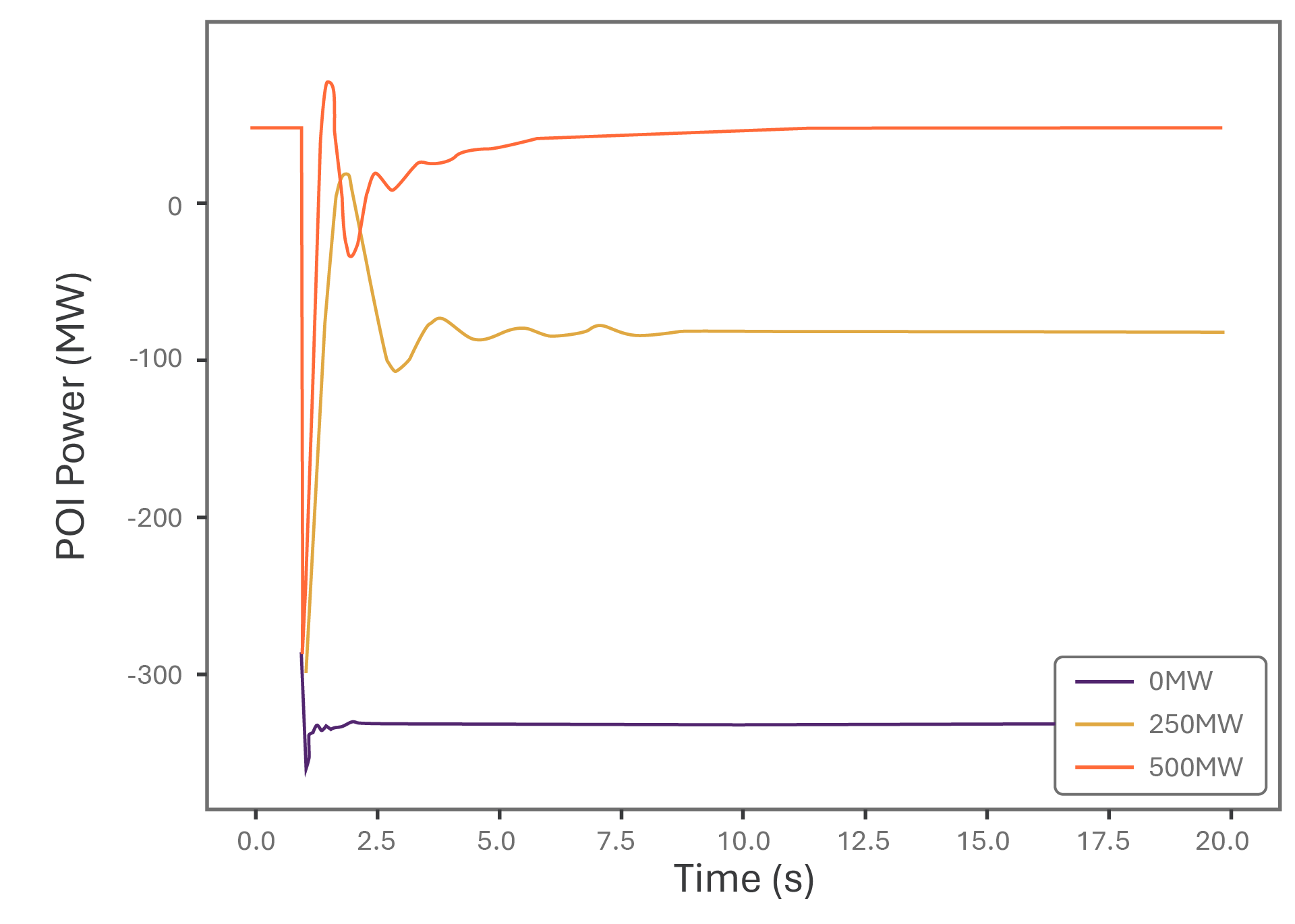
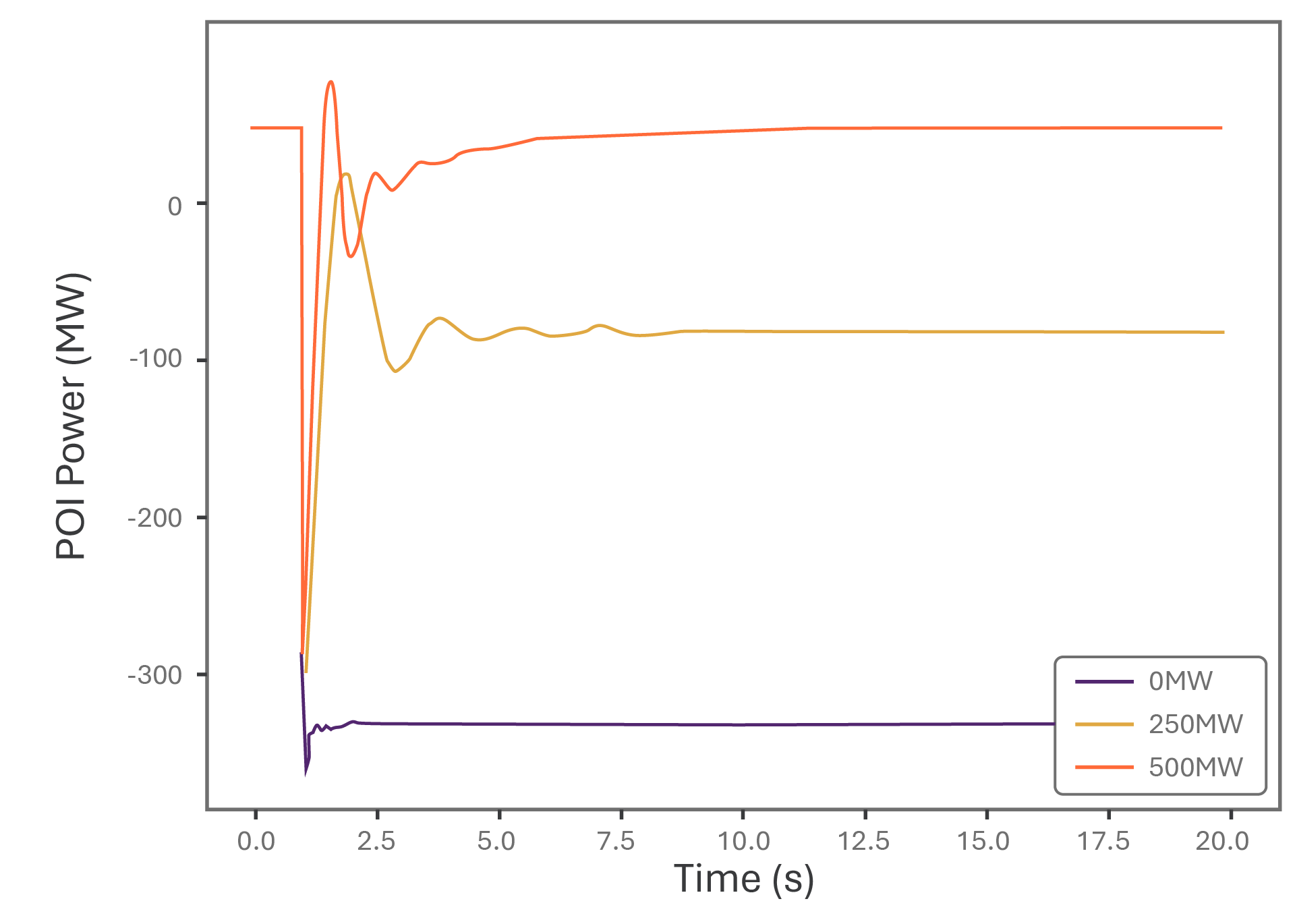
Even in facilities designed for net-zero operation, a transient increase in power drawn from the grid occurs immediately following a disturbance. On-site resources can respond quickly and significantly reduce both the magnitude and duration of this dependency, but they cannot eliminate the initial response from the grid.

This behavior highlights a key limitation of net-zero assumptions. While facilities can achieve balanced operation over time, instantaneous compliance during dynamic events is constrained by the physical realities of system response. 

Net-Zero as a Time-Dependent Condition

Analysis of a representative large-load configuration combining colocated generation and battery energy storage highlights a consistent pattern in system response across a range of operating conditions.

Figure 2: Study Case Schematics

CLICK TO ENLARGE

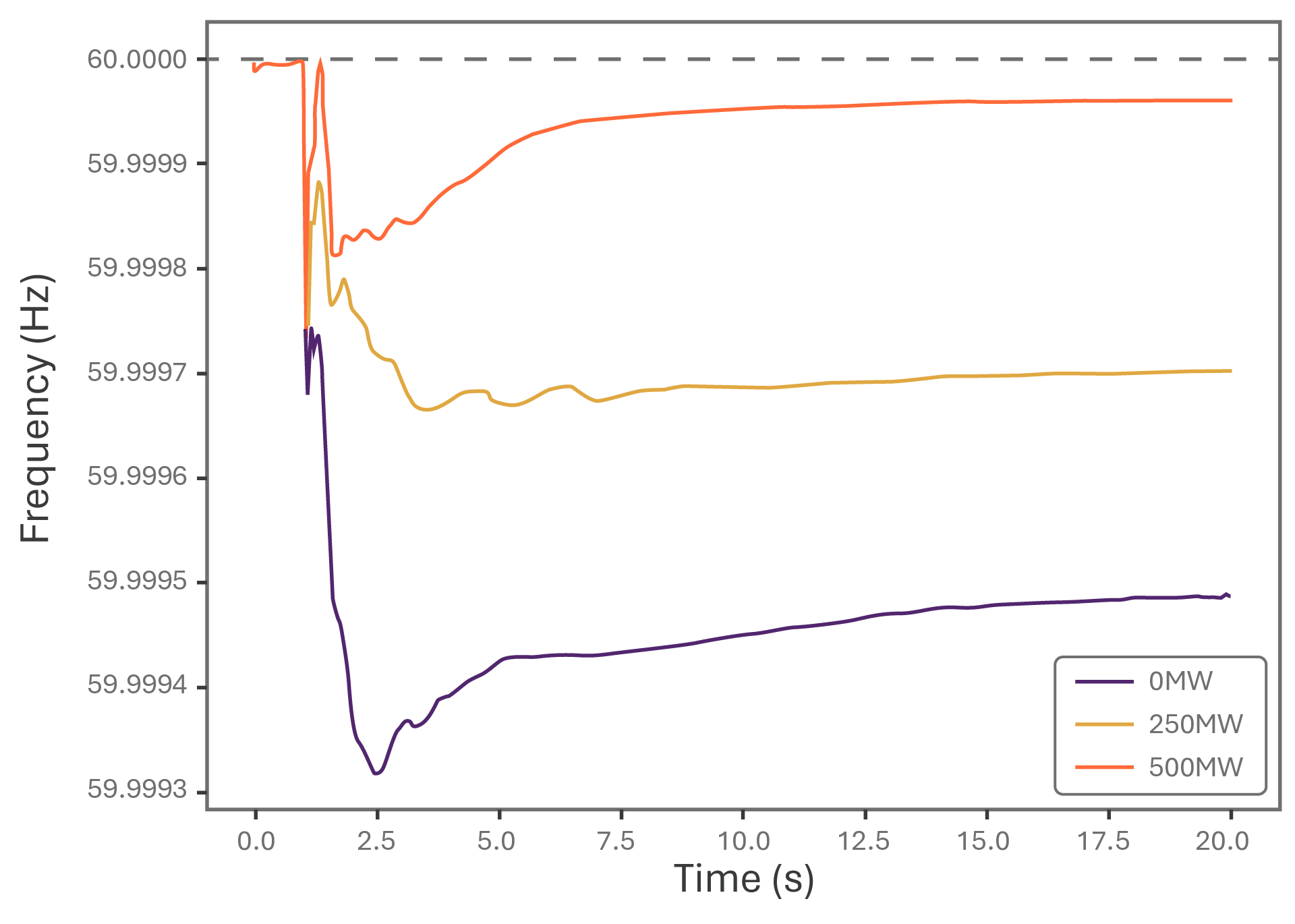
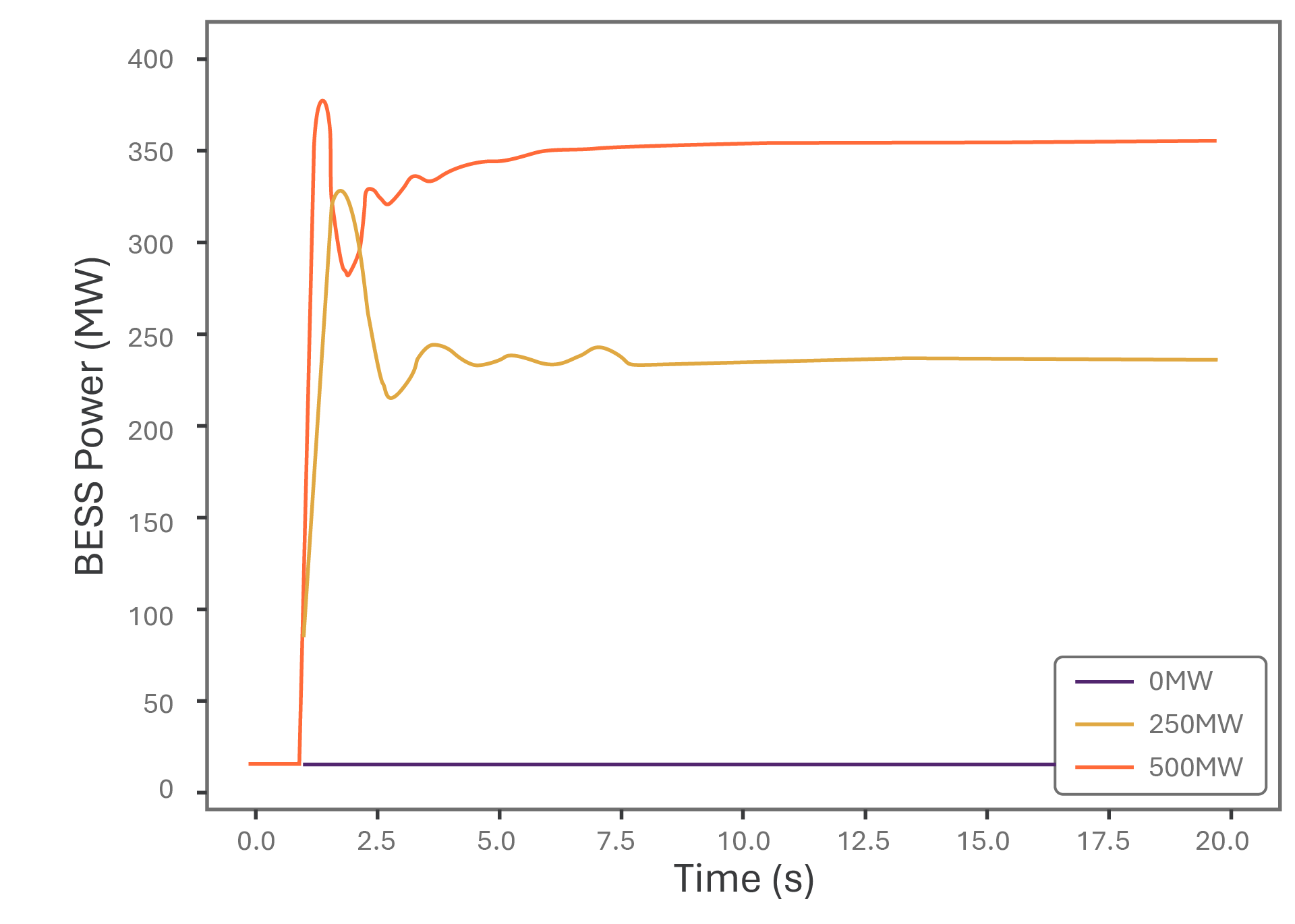
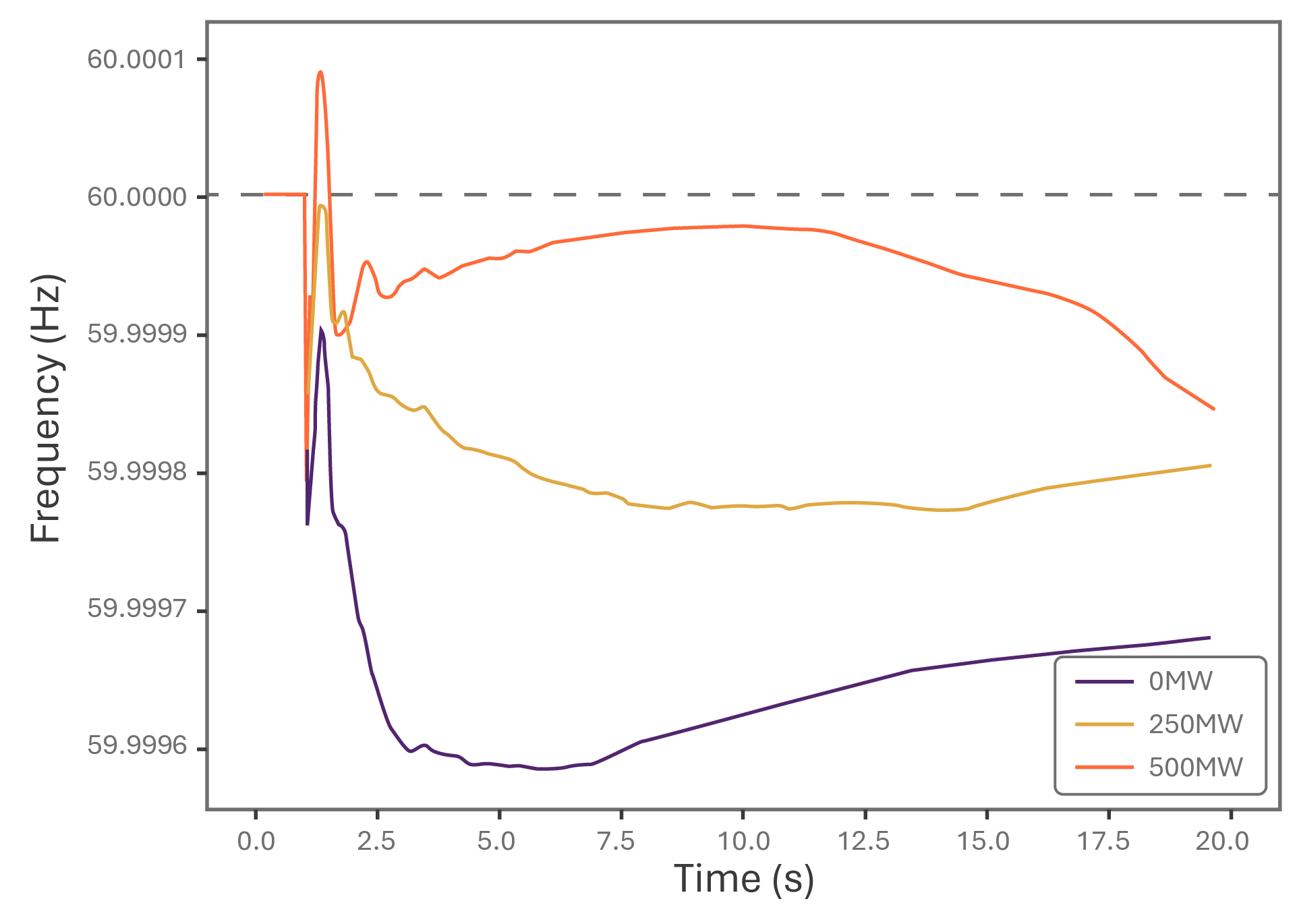
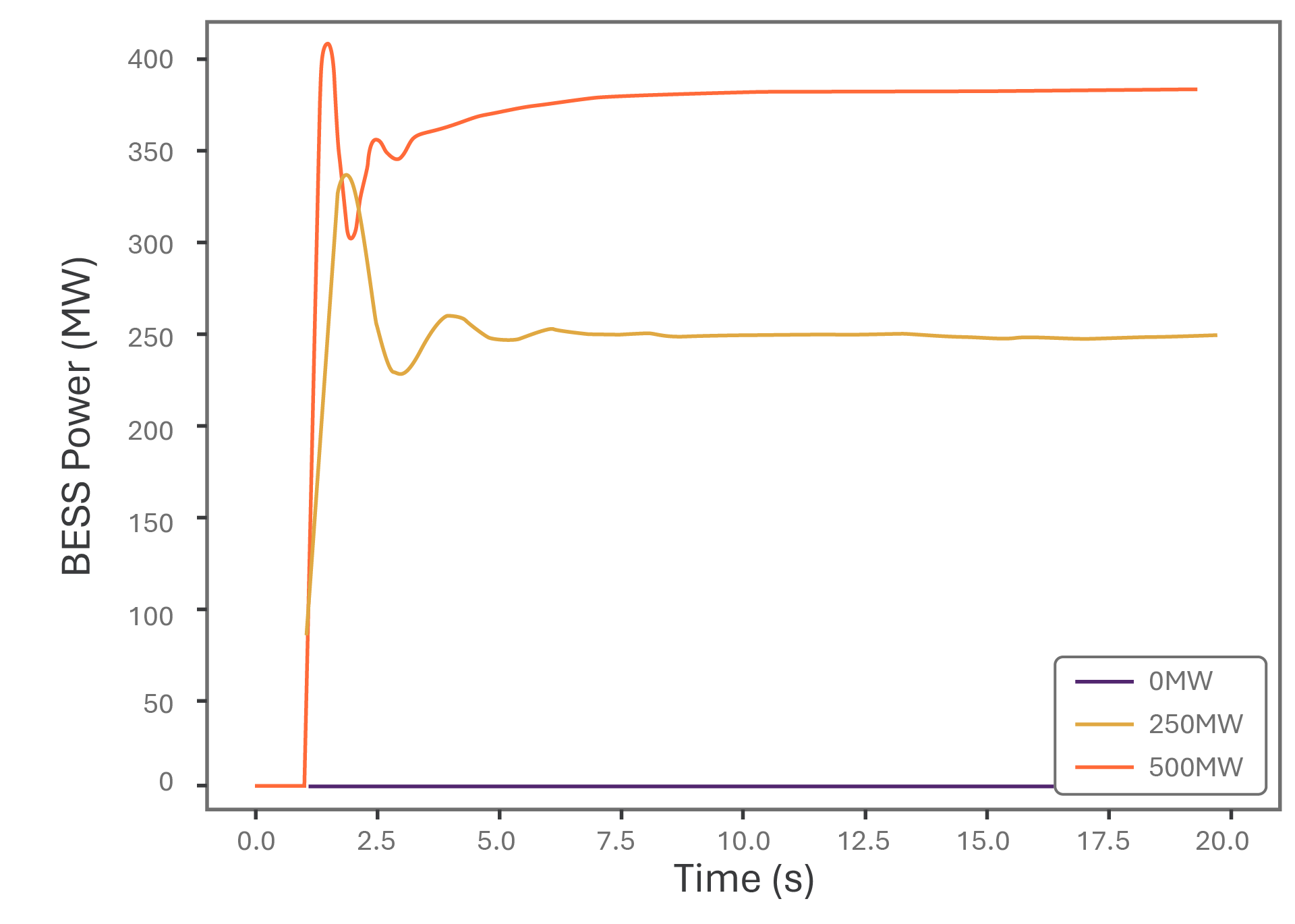
When a major behind-the-meter generator is lost, the system experiences an immediate imbalance. The grid responds first, followed by a rapid but slightly delayed response from on-site storage. As storage capacity increases, system performance improves. Frequency deviations are reduced, and recovery occurs more quickly. However, the sequence of response does not change.

Figure 3: Frequency Response High Renewable case

CLICK TO ENLARGE

Figure 4: BESS Response High Renewable case

CLICK TO ENLARGE

Figure 5: Grid Import/ Export High Renewable Case

CLICK TO ENLARGE

Across all scenarios, there is a short but unavoidable increase in power drawn from the grid immediately following a disturbance. Storage reduces the magnitude and duration of this response, but it does not eliminate it.

Figure 6: Frequency Response Summer Peak Case

CLICK TO ENLARGE

Figure 7: BESS Power High Summer Peak Case

CLICK TO ENLARGE

Figure 8: Grid Import/Export Summer Peak Case

CLICK TO ENLARGE

This reflects the layered nature of system behavior. The grid provides an immediate response driven by physical laws. Storage follows with fast support, and other resources contribute as the system stabilizes. Net-zero operation can be achieved over an interval, but not at every moment. Short-duration deviations are an inherent feature of system dynamics.

The dynamic behavior observed in net-zero configurations has direct implications for how projects are planned, designed and evaluated. As interconnection frameworks evolve, aligning expectations with physical system response becomes increasingly important. 

Rethinking Interconnection Requirements

Frameworks that assume strict, instantaneous compliance with import or export limits may not reflect how the system operates during real-world events. Short-duration deviations at the point of interconnection are a natural outcome of disturbance response.

This introduces an opportunity to define performance in a more practical way. Rather than focusing solely on instantaneous limits, interconnection approaches may consider time-based criteria that account for transient conditions while maintaining overall system reliability.

Emerging technologies and system configurations build on this layered approach and may further shape how net-zero interconnection frameworks evolve. In addition to battery energy storage, fast-response solutions such as advanced power electronics, uninterruptible power supply (UPS) systems and technologies like e-STATCOM can enhance dynamic performance. Coordinated approaches that integrate these resources with BESS can address different response timescales, reducing both the magnitude and duration of transient grid interaction. Continued development of control strategies and system integration will play a key role in optimizing how these technologies perform under both normal and contingency conditions. 

The Role of Energy Storage in System Response

In net-zero configurations, battery energy storage is often positioned as a primary tool for maintaining compliance. The analysis shows that storage is highly effective in reducing grid dependency, but its role is more nuanced.

Storage does not replace the grid’s immediate response. Instead, it acts as a fast-following resource that limits the extent and duration of that response. This shifts how storage should be evaluated. Power capacity becomes critical for rapid response to disturbances, and control strategy and response time directly influence performance. Coordination with other onsite resources shapes overall system behavior.

The system operates as a sequence of responses across different timescales, creating a need for coordinated, multi-technology solutions that address each phase of system behavior.

Battery storage provides fast active power support, but additional technologies may contribute to overall performance. Fast-response power electronics and alternative configurations of on-site systems can help reduce the magnitude of transient grid reliance. Hybrid approaches allow different components to address specific response needs while improving overall system performance. 

Aligning Design With System Behavior

Net-zero frameworks offer a pathway to accelerate interconnection, but they do not eliminate the underlying physics that govern system response. Recognizing this early in project development can help set realistic operating expectations, inform design decisions and support more effective coordination between developers and system operators.

Managing transient grid interaction is a system-level design challenge. Battery energy storage plays a central role, but its effectiveness depends on how it is integrated and controlled.

Response speed, power capacity and coordination with on-site generation directly influence performance during contingency events. Control system architecture and real-time response strategies shape how effectively resources operate together.

Rather than relying on a single solution, a layered approach allows multiple technologies to address different aspects of system behavior. This can improve both technical performance and overall system efficiency.

As interconnection frameworks continue to evolve, new technologies and approaches may further shape how large loads interact with the grid. Advancements in power electronics and control systems offer opportunities to enhance response speed and system coordination. Technologies capable of delivering rapid active and reactive power support may complement energy storage and improve overall performance.

At the same time, continued refinement of control strategies and coordination between on-site resources will play a critical role in optimizing system behavior. These developments point toward a more integrated approach to managing dynamic response.

Emerging interconnection approaches are reshaping how large-load projects move forward within existing grid constraints. As ERCOT and other markets evaluate flexible pathways for accelerated energization, understanding the dynamic interaction between large loads, onsite resources and the bulk power system becomes increasingly important.

The technical challenge is no longer limited to reducing steady-state grid dependence. It also includes managing transient system behavior during disturbances, where instantaneous grid interaction remains unavoidable even in highly self-sufficient configurations.

Successfully navigating this environment requires coordinated evaluation of system dynamics, interconnection requirements, onsite resource portfolios and control strategies early in project development. Developers, utilities and system operators that incorporate these considerations upfront can better align operational expectations, improve reliability performance and reduce the risk of costly redesigns later in the interconnection process.

Dynamic system performance will increasingly shape how projects are studied, designed and operated as large-load frameworks continue to evolve. Organizations that account for these realities early will be better positioned to accelerate deployment while maintaining reliable integration with the grid. 


Authors

Mohammadali Rostami

Transmission Planning Consultant

Jay Tailor

Project Delivery Manager

Pradeep Tripathi

Director

Ravikanth Varanasi

Senior Managing Director